Namibia Travel Guide 2026 – Towering Orange Dunes, Skeleton Coasts & Wildlife Pans
Namibia is known for the world's highest orange sand dunes at Sossusvlei, dramatic coastal shipwrecks, and excellent wildlife viewing in Etosha National Park. Travel interest focuses on landscape photography, self-drive road trips, and desert-adapted wildlife safaris in 2026.
In 2026, Namibia captivates the global imagination as a land of cosmic landscapes, endless horizons, and unparalleled isolation. Namibia is known for the world's highest orange sand dunes at Sossusvlei, dramatic coastal shipwrecks, and excellent wildlife viewing in Etosha National Park. Travel interest focuses on landscape photography, self-drive road trips, and desert-adapted wildlife safaris in 2026, beckoning travelers to navigate well-maintained gravel tracks where towering sand mountains collapse straight into the roaring Atlantic, and ancient salt pans provide a stark backdrop for desert-adapted rhinos, elephants, and lions.
Seasonal Planning
Best Times to Visit
- Dry Winter Peak Season (May – September): The absolute premium time for self-drive overlanders. Nights are cold and crisp, days are mild, and wildlife concentrates heavily around waterholes in northern parks.
- Photography Peak (June – August): The crisp winter atmosphere provides unparalleled clarity and sharp light for shooting the stark sand dunes and ghost towns.
- The Coastal Vent Window (December – March): While the desert interior roars with summer heat, coastal enclaves stay cool and pleasant, offering relief from the sun.
- The Summer Rain Phase (January – April): Brings intense afternoon downpours that trigger dramatic desert blooms and welcome active bird migration. Wildlife disperses away from fixed park waterholes.
Climate Note
Namibia's climate is largely arid and semi-arid. Interior winter days are comfortable (21°C - 25°C), but desert temperatures plummet below freezing (0°C) at night. Summer can be punishingly hot in the deep sand dunes, regularly exceeding 40°C, while the immediate coast remains perpetually chilled by the cold Benguela Current.
From Blinding Salt Pans to the Gates of the Atlantic
Top Overland Adventures & Safari Journeys 2026
Exploring Namibia’s immense territory is traditionally optimized via fully equipped 4x4 self-drive rentals with rooftop tents, or through chartered light-aircraft hop flights that connect remote safari outposts.
- Dune 45 & Big Daddy Climb: Scale the sheer ridge lines of the world's most massive sand dunes at sunrise to view a sea of endless orange sand wave crests.
- Deadvlei Photography Walk: Tread across a blinding white clay pan punctuated by 900-year-old, sun-blackened camel thorn trees framed by stark orange sand walls.
- Etosha Waterhole Watch: Park your rental rig silently by a spring to watch massive herds of elephants, rhinos, giraffes, and lions gather simultaneously.
- Skeleton Coast Shipwreck Fly-Over: Take a scenic low flight to witness old rusted ocean ship hulls slowly being swallowed by coastal desert dunes.
- Kolmanskop Ghost Town Tour: Wander through abandoned German colonial diamond-mining houses that are slowly filling with soft desert sand.
- Spitzkoppe Granite Bouldering: Hike and camp among massive, smooth granite rock formations that rise dramatically from the flat desert floor.
6 Essential Destinations
Windhoek
The tidy highland capital. A serene, organized valley city blending historical architecture with craft breweries, modern galleries, and cozy cafes.
Sossusvlei
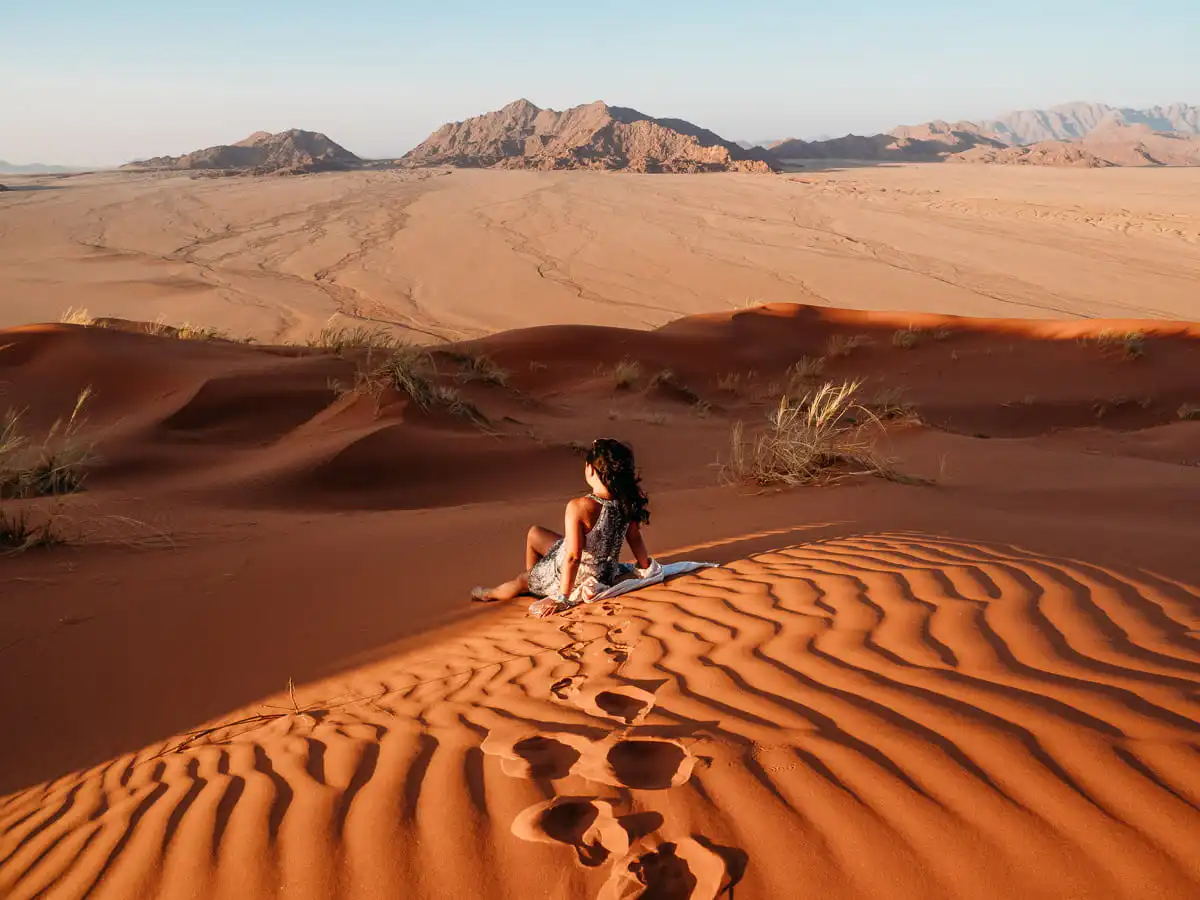
The iconic heart of the desert. Home to majestic red-orange sand mountains, the surreal clay pan of Deadvlei, and deep, ancient canyons.
Etosha National Park
A premier wildlife sanctuary. Anchored by a massive salt pan so vast it can be seen from space, providing exceptional big game viewing opportunities.
Swakopmund
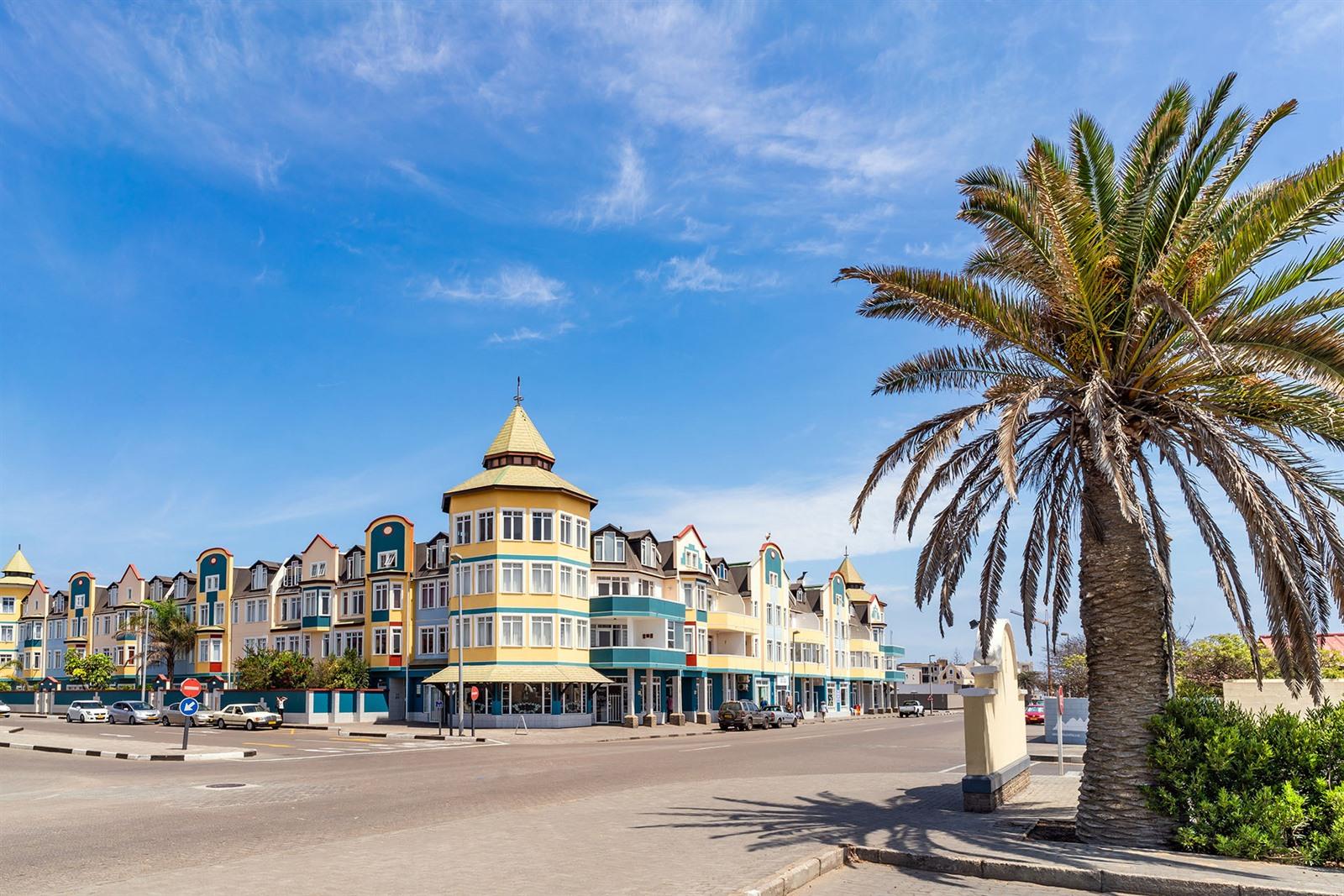
The adventure coast enclave. A unique seaside resort town flanked by sand dunes, offering ocean kayaking, quad biking, and fresh Atlantic oysters.
Damaraland
The rugged wilderness frontier. A striking landscape of red rock mountains protecting ancient rock art, desert-adapted elephants, and black rhinos.
Skeleton Coast
The untamed shore. A lonely, mist-shrouded coastline known for roaring surf, massive fur seal colonies, and historic, weathered shipwrecks.
Master Logistics & Transport
First Mile: Airport to Capital Ground Connections
Transitioning safely and efficiently from the international arrivals terminal directly into the commercial center of Windhoek is best managed via this precise method:
- Windhoek Airport (WDH) to Center: The single best, most secure choice is booking a pre-arranged airport shuttle service through your lodge or coordinating a direct pickup through a verified rental car company. Standard digital mobile ride-hailing networks are limited here. A licensed airport taxi driver down the scenic Sam Nujoma Drive highway takes roughly 35–45 minutes across the rolling hills, costing about 350–450 NAD (~$20–$25 USD).
- The Self-Drive Blueprint: Renting a robust 4x4 vehicle equipped with dual spare tires, an auxiliary fuel tank, and a tire pressure gauge is highly recommended for exploring the interior.
- Gravel Road Protocol: Namibia’s national gravel highways are wide but can be hazardous. Travelers should maintain a cautious speed limit under 80 km/h on gravel to avoid tire blowouts or loose sliding.
- Visa-Free Advantages: Passport holders from the US, UK, EU, Canada, Australia, and select global nations receive a tourist visa upon arrival for stays up to 90 days.
Navigating Through the Horizons
- Left-Hand Traffic Reality: Driving across the country happens strictly on the left-hand side of the road, requiring focus on remote, empty tracks.
- Chartered Air Taxis: Light aircraft services reliably skip across the vast distances between remote luxury desert outposts, saving travel days.
- Fuel Station Discipline: Distances between desert outposts are immense. A key rule for self-drivers is to stop and top off your fuel tank at every single station you encounter.
Currency Dynamics (Namibian Dollar - NAD & ZAR)
The official currency is the Namibian Dollar (NAD), which is pegged at a 1:1 fixed exchange rate directly to the South African Rand (ZAR). Both currencies circulate interchangeably as legal tender nationwide. Major international credit cards are widely accepted at modern hotels, national park offices, and fuel stations. However, keeping physical cash notes handy is necessary for tipping road park attendants and buying curios. 1 USD ≈ 18.5 NAD.
Wildlife Safety Laws
National parks strictly prohibit exiting your vehicle outside of designated fenced camp boundaries, particularly inside Etosha, due to active big game movement.
Culinary Staples & Braai Traditions
Iconic Traditional Flavors
- Traditional Smoked Kapana: A beloved urban street food staple. Strips of tender lean beef are flash-grilled over blazing open wood fires, then seasoned with hot chili powder and coarse salt.
- Savory Game Meat Braai: The core of local culinary life. Premium cuts of springbok, kudu, oryx, and eland are slow-cooked over hot wood embers at backyard or wilderness barbecues.
- Spiced Cured Biltong: Highly popular, air-dried strips of spiced game meat or beef marinated in coriander, vinegar, and black pepper, perfect for long road trips.
The Cultural Ritual of the Bush Braai
Namibian social life centers around the fire pit, locally known as a **Braai**. Whether camping under the desert stars at Spitzkoppe or staying at a luxury safari lodge, lighting a fire each evening is a traditional ritual for sharing travel stories, planning tomorrow's route, and listening to the calls of the desert night.
Coastal Breweries & Rooibos Breaks
Cool down after a long desert road trip with a cold, crisp lager brewed according to historic purity laws in Swakopmund. For a comforting morning warm-up in the chilly coastal fog, enjoy a hot cup of locally harvested wild herbal Rooibos tea.
Safety & Budget 2026
Daily Budget (USD / NAD Framework)
Namibia is configured well for independent travelers, offering safe, organized camping infrastructure that balances high-end fly-in eco-luxury options.
Independent Self-Drive (Rented 4x4 with Roof Tent / Park Campsites / Supermarket Cooking)$65 – $110 / day
Premium Fly-In Safari (All-Inclusive Remote Lodges / Chartered Light Air Transit / Private Guides)$450 – $1,200 / day
Smart Security & Desert Awareness
- A Peaceful Welcome: Proudly recognized as one of the most stable, secure, and tourist-friendly destinations on the African continent. Exercise standard urban caution in downtown Windhoek by locking your vehicles and hiding valuables from view.
- Desert Survival Realities: The primary safety risk here is environmental rather than social. Always travel with at least 5–10 liters of drinking water per person inside your vehicle, carry a physical highway map, and check your spare tire before entering deep desert trails.